Main
Specialists
Marutyan Irina Georgi
015 400 300 /21 36/
010 23 68 83 /21 36/
010 23 68 83 /11 03/

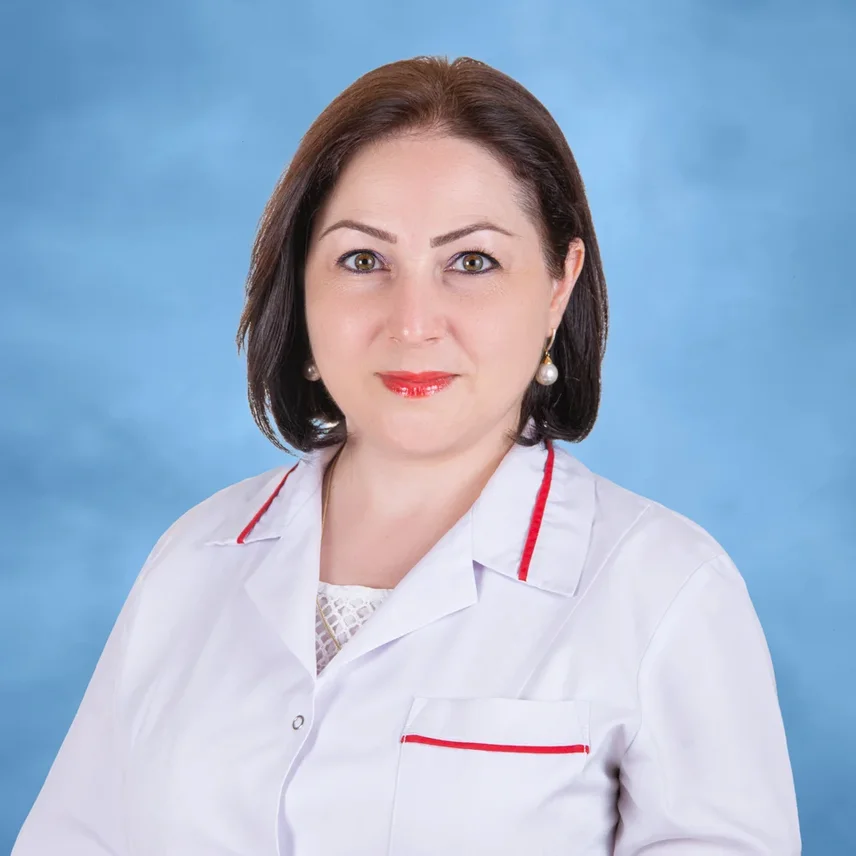
Marutyan Irina Georgi

Head of the Endocrinology Service

Pediatric endocrinologist


Date of Birth: 01.08.1966, Yerevan

Education
1989–1990 - Internship, 2nd Children’s Clinical Hospital
1983–1989 - Yerevan State Medical University after Mkhitar Heratsi


Work Experience
2019–2024  Pediatric endocrinologist, “Baghramyan” Polyclinic
since 2010  Head of the Endocrinology Service, “Arabkir” Medical Center
1999–2010  Pediatric endocrinologist, “ArBeS” Health Care Center
1990–1999  Pediatric endocrinologist, “Arabkir” Children’s Polyclinic


Internship in Switzerland
1995–1996 Porrentruy Regional Hospital (three-month internship), Lausanne Children's Hospital (three-month internship), Geneva University Hospital (six-month internship)
2002 Porrentruy Regional Hospital; Lausanne Children's Hospital
2007 Lausanne Children's Hospital
2010 Lausanne University Hospital, Department of Endocrinology and Diabetology
2011 Diabetology Congress, Geneva
2016 Geneva University Hospital, Department of Pediatric Endocrinology and Diabetology
2022 Geneva University Hospital


Training in France
2024 - Nice University Hospital


Languages
Armenian, Russian, French


Media
November 14 is World Diabetes Day
14 November
Since 2007, the birthday of the Canadian scientist who first used insulin to save the life of a 14-year-old boy has been marked as World Diabetes Day. Many questions still concern the public about this widespread condition. Irina Marutyan, Head of the Endocrinology Service at the Arabkir Medical Center, addressed several common concerns. Is fruit sugar as harmful as white sugar? No. White sugar is more harmful, as fruit sugar is primarily fructose. When consumed in moderation and at appropriate times according to insulin activity, its negative effects are significantly reduced. Is it true that diabetes occurs only in overweight individuals? No. Diabetes has two main types. Type 1 diabetes, which develops in childhood, is an autoimmune condition and is not caused by excess weight—though maintaining a healthy weight is still desirable. In contrast, excess body weight does increase the risk of developing Type 2 diabetes. Diabetes cannot be cured, but can it be fully controlled? Yes. While not curable, diabetes can be effectively and completely controlled with proper management. Does stress raise blood sugar? In people with diabetes, stress can elevate blood glucose levels and negatively affect the course of the disease. Endocrinologist Irina Marutyan encourages everyone to monitor body weight, stay physically active, and maintain healthy eating habits. Early diagnosis greatly improves disease management. Diabetes is not a disease—it is a lifestyle.