 English
 Հայերեն
 Русский
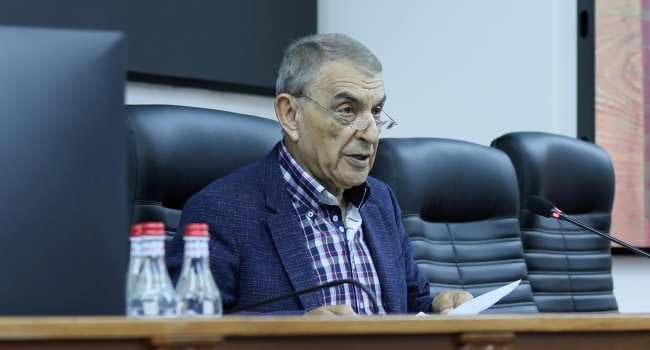
News.am recently interviewed Professor Ara Babloyan regarding the newly established "Union of Medical Institutions of Armenia" Public Organization.
• Yesterday, information was published about the establishment of the "Union of Medical Institutions of Armenia" Public Organization. On June 19, the organization held its inaugural meeting, chaired by Professor Ara Babloyan. NEWS.am Medicine aimed to learn more about this new organization, including its origins, the motivation behind its creation, and its objectives.
Professor Babloyan, how did the idea of creating the "Union of Medical Institutions of Armenia" Public Organization come about?
In my view, the Armenian healthcare system has long needed such an organization. However, the idea first emerged during an extended consultation convened by Minister of Health Anahit Avanesyan. The meeting was held to present and discuss the comprehensive health insurance program. The minister sought the opinions of those directly involved in providing medical care and services.
During the meeting, while the general response from medical institution heads was positive, various questions and perspectives were raised, leading to a productive and meaningful discussion. It was during this exchange that the concept of forming an organization of medical institutions, drawing on international experience, was proposed. The goal was to create an entity that would actively collaborate with the Ministry to ensure the smooth implementation of this crucial project for our country.
What will be the status of the organization?
Initially, a group of initiators was formed to work on defining the organization's purpose, status, management principles, and statutes. The “Union of Medical Institutions of Armenia” Public Organization was registered following the established procedures. Its primary goal is to “support the development of medical institutions and enhance their operational efficiency to contribute to the advancement of the healthcare system in Armenia and the improvement of public health.”
On June 19, the organization held its inaugural extended session, during which several decisions were made to ensure the efficient operation and collaborative management of the organization.
The information indicated that the organization would have a large, expanded board and a five-member presidency. How was this determined, and on what basis?
First, it’s important to consider that Armenia has approximately 600 medical facilities, with about 21% providing inpatient services and 79% offering outpatient care. Additionally, 164 of these facilities are privately operated. All 600 organizations are eligible to become members of the union.
The organization’s secretariat is currently being established, and once complete, all medical institutions will be invited to join the organization.
The highest governing body of the organization is the General Meeting of its members. To ensure collegial management and representation of medical institutions of varying levels and statuses, the Council was approved with 37 members. From this Council, a five-member Presidency was formed. Each member of the Presidency will serve a one-year term in rotation.
Professor Babloyan, you chaired the first session, but you are not included in the published composition of the presidency. Are you a member of the Council?
I have chosen to serve as an advisor to the organization rather than as a member or president. I find it more meaningful to support and consult with my younger colleagues than to hold a formal leadership position.
Our organizational structure reflects a commitment to the collective good over personal interests. It demonstrates our ability to prioritize the health of the public and work together towards advancing our healthcare system.
What are the organization's current priorities?
Our primary focus is on health insurance, the licensing of specialists, and addressing the list of professions and associated educational reforms.
The challenges are numerous and varied, so we must collaborate closely with the Ministry of Health and various professional associations and healthcare organizations. I am confident that, with joint efforts, we will succeed.
About health
Union of Medical Institutions of Armenia26 June 24
Last news
International Day of Laboratory Diagnostics Specialists
15 April
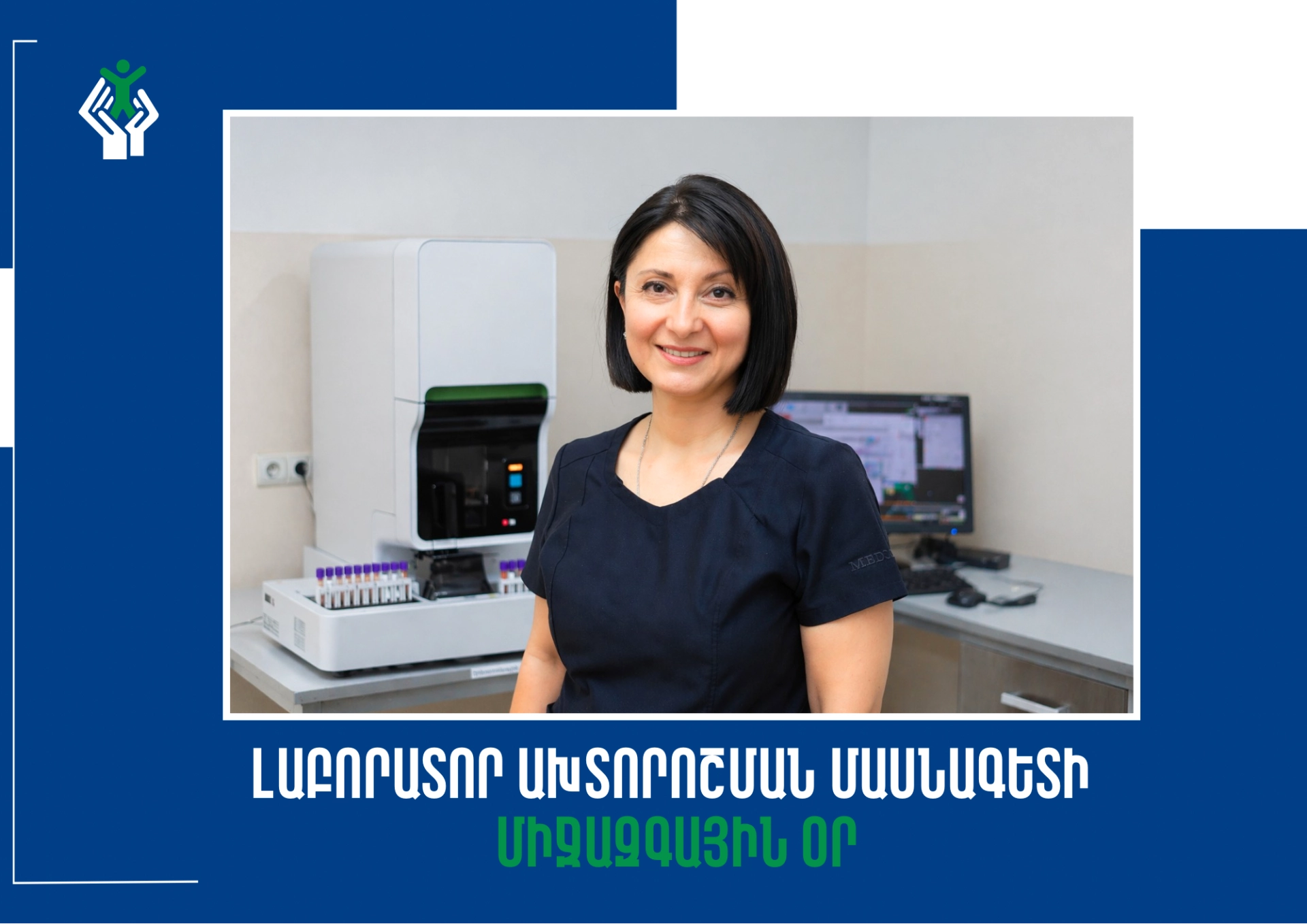
Today is the International Day of Laboratory Diagnostics Specialists.We congratulate all employees of the laboratory diagnostic service of Arabkir Medical Center, wishing them good health, endless energy, and new professional achievements.Your work is truly invaluable.Arabkir Medical Center — A Reliable Partner in Health
A Toy Preserved for 35 Years: A Story of Treatment and Doctor–Patient Friendship
13 April
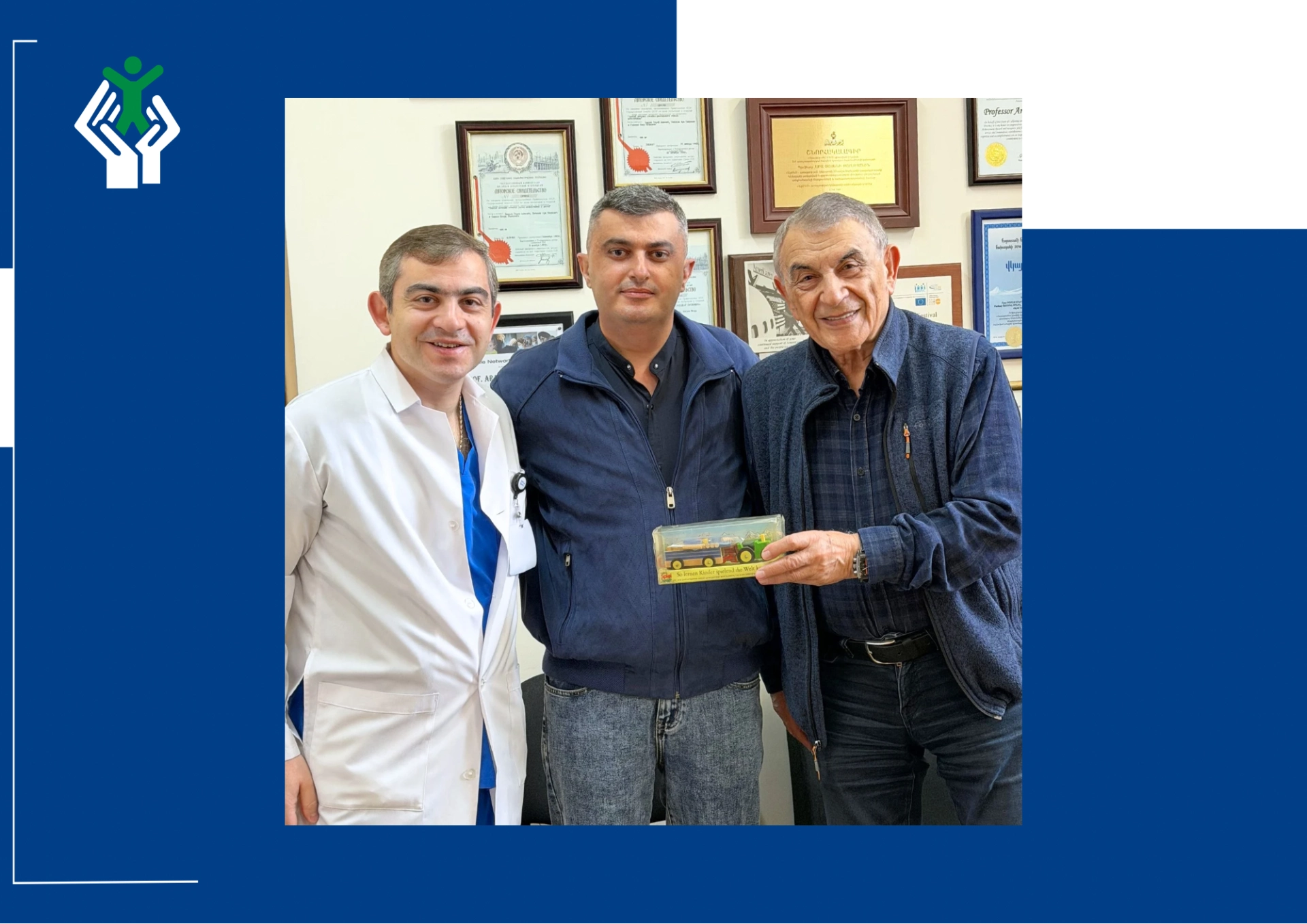
A toy, carefully preserved for more than 35 years, has become a silent witness to the history of Andranik’s treatment and to the special bond between doctor and patient.
Andranik is one of the patients of Arabkir Medical Center. Decades ago, Ara Babloyan performed surgery on the young boy and gave him a toy as a gift.
Thirty years later, Sergey Babloyan took responsibility for Andranik’s health and performed a kidney transplant.
During one of his regular postoperative visits, Andranik brought the toy with him to Arabkir Medical Center—the same toy that Ara Babloyan had given him in 1991—as a sign of gratitude to the father and son who had saved his life.
The cooperation of generations has an important goal: to build a healthy society and continue to be a reliable partner in health.
Arabkir Medical Center — A Reliable Partner in Health
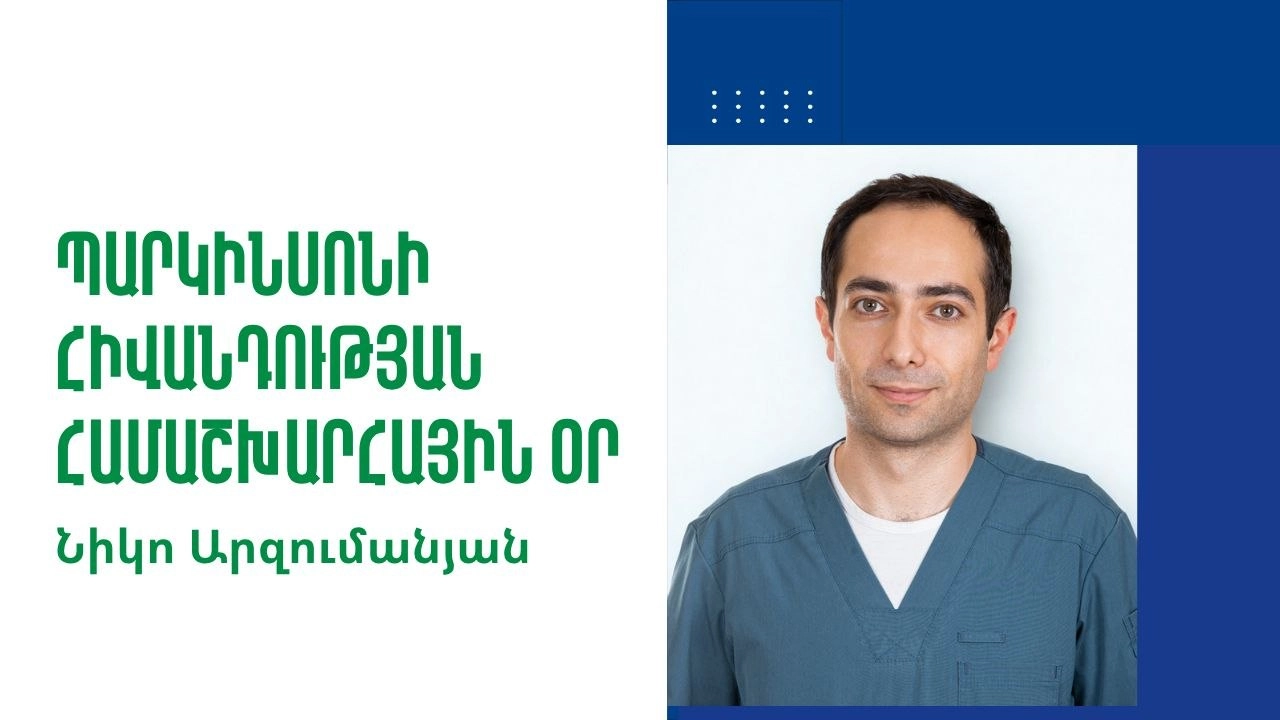
World Parkinson’s Day
11 April
April 11 is World Parkinson’s Day.
Tremor and stiffness of the extremities, as well as sleep, speech, gait, and digestive disorders, may indicate the presence of this disease. Neurosurgeon Niko Arzumanyan spoke about the surgical treatment of Parkinson’s disease and related topics.
Arabkir Medical Center — A Reliable Partner in Health
A step towards a new quality of medical care: The progress of the ESPAGHAN «Health Care Transition» Campaign in Gastroenterology
09 April
Ensuring continuity of medical care, especially for children with chronic diseases after the age of 18y.o., is one of the important challenges of healthcare. The work carried out in this direction in the field of gastroenterology in Armenia is ongoing, due to the joining of the Pediatric Gastroenterology service of «Arabkir» MC - ICAH to the «Health Care Transition» Campaign launched by ESPAGHAN (European Society of Pediatric Gastroenterology, Hepatology and Nutrition) since October 2025.
Let us recall that in October 2025, the Pediatric Gastroenterology Section was established under the Armenian Pediatric Association, which unites 17 pediatric gastroenterologists, endoscopists and hepatologists of the republic.
In December 2025, the Pediatric Gastroenterology Section of the Armenian Pediatric Association organized the first meeting of gastroenterologists from the four pediatric and five adult tertiary care Medical Centers at the «Arabkir» MC - ICAH, during which the professional resources of the ESPGHAN above-mentioned campaign, translated into Armenian, were presented, discussed, and disseminated.
The «Health Care Transition» Campaign launched by ESPGHAN continued in February and March of 2026. One of the key achievements of the Campaign is the cooperation that has begun between pediatric and adult gastroenterologists. In February and March, the presentations, discussions, and dissemination of ESPGHAN resources (in printed and electronic versions) continued in the gastroenterology departments of various medical centers and clinics in Yerevan, involving a wider professional network (about 55 people).Currently, the Campaign in Armenia faces certain objective difficulties, as the dispensary (follow-up) care / medical supervision of adult patients with chronic gatroenterological and hepatological diseases still needs to be regulated. The activity, interest and numerous positive responses and feedback from doctors prove that the «Health Care Transition» Campaign in Armenia is relevant and needs further development.
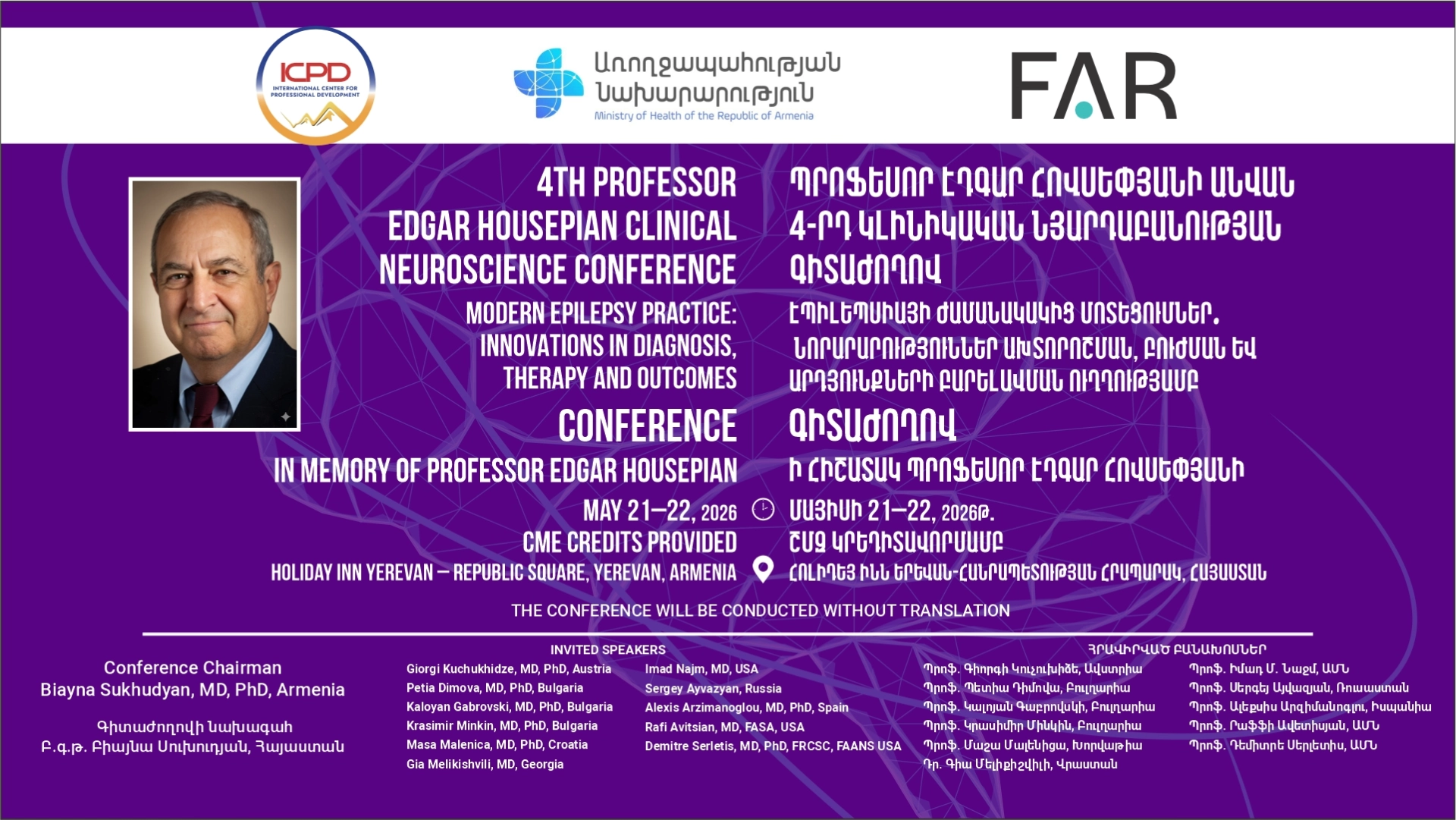
Yerevan to Host a Conference on Clinical Neurology
08 April
The 4th Annual Conference on Clinical Neurology, named after Edgar Hovsepyan, will bring together neurologists, neurosurgeons, and leading specialists in the fields of anesthesiology and radiology from different countries in Yerevan, Armenia. A number of important topics will be discussed during the conference, including:
Modern approaches to the treatment of Epilepsy
Clinical and diagnostic perspectives
The role of Electroencephalography in the diagnosis of epilepsy
Therapeutic advances
Challenges in identifying epileptic foci in the preoperative period
Determining the appropriate time to discontinue drug therapy in the postoperative periodAdditional issues related to the conference topic will also be addressed.CME credits will be awarded to participants.
The participation fee is 25,000 AMD.
Registration will open soon.
The conference will take place on May 21–22, 2026, from 08:30 to 18:00, in the “Tushpa” Hall of the Holiday Inn Yerevan - Republic Square.
Arabkir Medical Center — A Reliable Partner in Health
April 7 Is World Health Day
07 April
World Health Day is dedicated to raising awareness of the most important global health issues and uniting efforts to address them. In 2026, the day is marked under the theme: “Together for health. Stand with science”.
On April 7, 1948, the World Health Organization (WHO) was founded. Two years later, in 1950, April 7 was officially declared World Health Day in honor of the establishment of the WHO. It should be noted that Armenia has been a member of the WHO since 1994. In 2024, Arabkir Medical Center – Institute of Child and Adolescent Health was granted the status of a WHO Collaborating Centre. This status is mainly awarded to research institutes, universities, and academic departments that work with the WHO in various areas of the health sector.
Arabkir Medical Center: A Reliable Partner in Health