 English
 Հայերեն
 Русский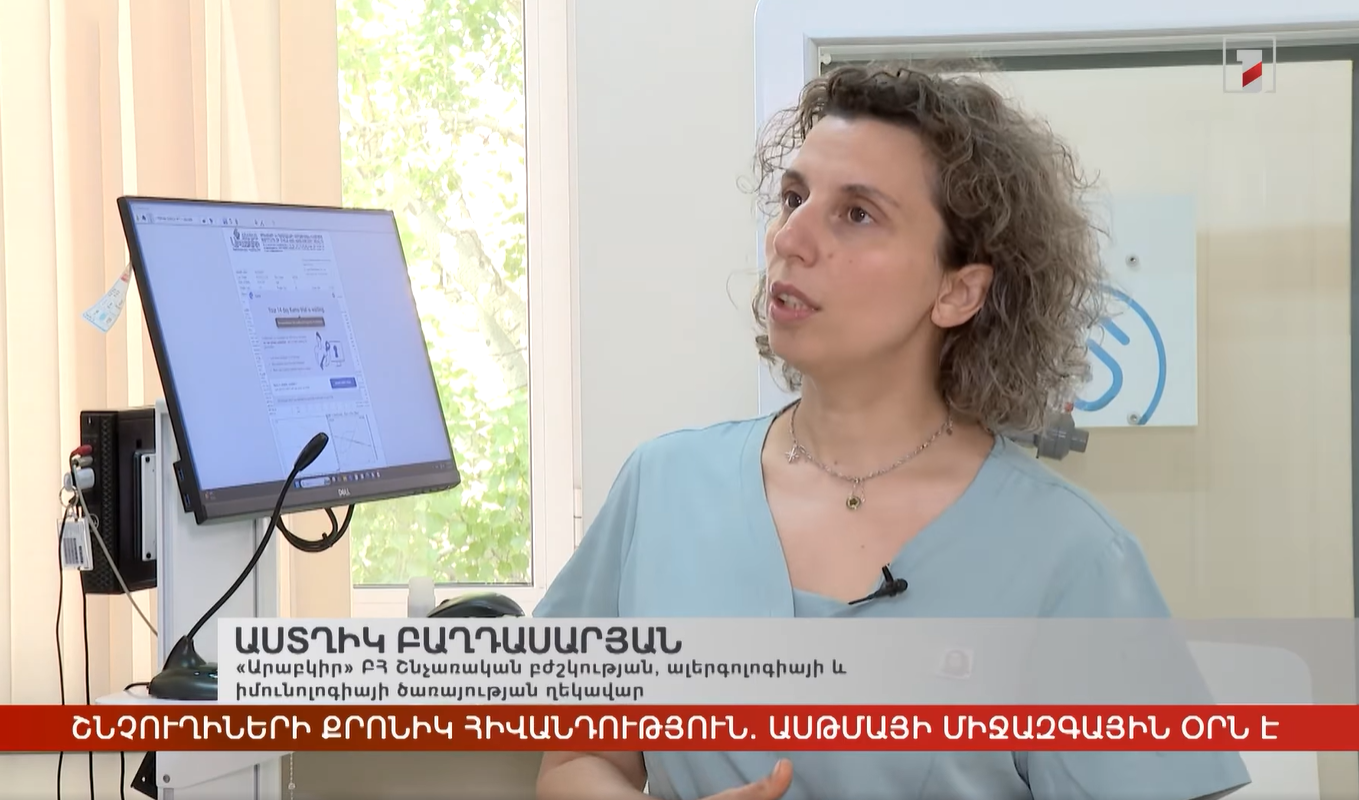
On the occasion of World Asthma Day, the News crew from the Public TV Company visited the “Arabkir” Medical Center to highlight the importance of asthma awareness and management. Dr. Astghik Baghdasaryan, Head of the Respiratory Medicine, Allergology, and Immunology Service, provided expert insights in response to the journalist’s questions.
The “Arabkir” Medical Center remains committed to supporting children living with asthma through a comprehensive approach that includes accurate diagnosis, effective treatment, and consistent outpatient follow-up care. Timely medical consultation is essential, and we urge parents to remain vigilant for early symptoms.
We express our sincere gratitude to the Health Fund for Children of Armenia (HFC Armenia) for their continued support in the provision of necessary medications.
-
Deep breaths, long exhalations, exercising on a treadmill. These are part of the diagnostic process for bronchial asthma, a chronic condition often influenced by genetic predisposition and environmental factors.
Dr. Astghik Baghdasaryan, Head of the Respiratory Medicine, Allergology, and Immunology Service at the Arabkir Medical Center, explains: “The problem is related to the bronchial tree. If we imagine it as a network of tubes resembling a tree, during asthma episodes, these airways narrow, making it difficult for the child to breathe — particularly to exhale. It takes longer for the air to leave the lungs.”
Asthma typically presents with symptoms such as shortness of breath, wheezing, and crackling sounds in the lungs. Since these symptoms can also be found in other conditions, timely medical evaluation is crucial for an accurate diagnosis.
Dr. Baghdasaryan continues: “In preschool-aged children, about one in three may show asthma-like symptoms — wheezing during and outside of viral infections. Many of these children outgrow the condition, but for some, it persists beyond the age of 4 or 5, when we begin to classify it as asthma.”
Various risk factors can contribute to the development of asthma, and exposure to allergens often triggers flare-ups. To identify such allergens, a skin prick test may be recommended.
“We perform respiratory allergen tests on the skin to determine whether there is an allergic component involved,” says Dr. Baghdasaryan.
Like other chronic conditions, asthma requires long-term monitoring and management. Early diagnosis and intervention can greatly improve outcomes, and in many cases, children may eventually outgrow the condition.
“The main medications used to treat asthma are inhaled therapies,” notes Dr. Baghdasaryan. “Unfortunately, many of these are not registered or available in our country. However, with support from the Health Fund for Children of Armenia and approval from the Ministry of Health, we are able to import and provide these essential medications to children under dispensary supervision.”
To improve asthma care across the country, specialists from Arabkir Medical Center — which holds an international certificate from the European Academy of Allergy and Clinical Immunology — are also training regional healthcare providers. This decentralized approach aims to make asthma diagnosis and treatment more accessible within local communities.