Main
News
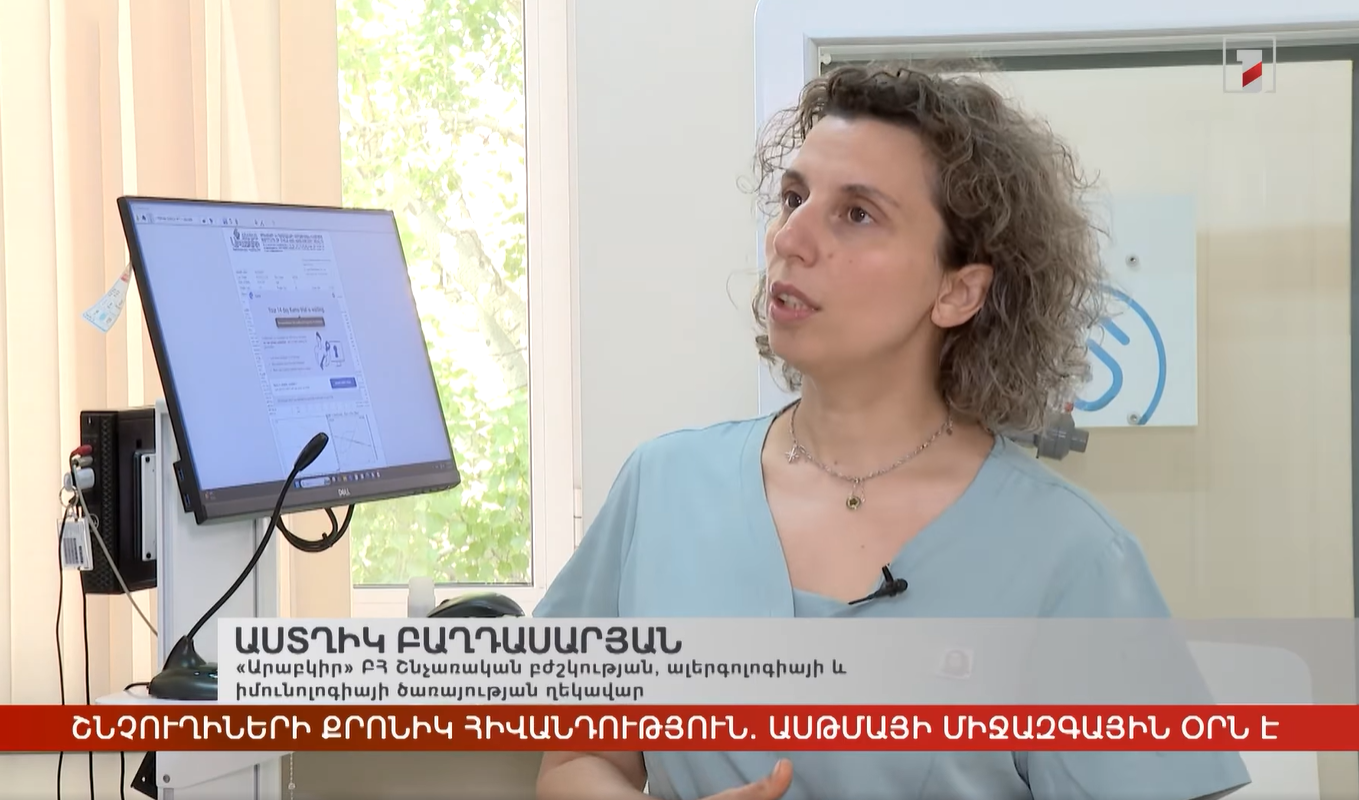
World Asthma Day Coverage by Public TV

World Asthma Day Coverage by Public TV

On the occasion of World Asthma Day, the News crew from the Public TV Company visited the “Arabkir” Medical Center to highlight the importance of asthma awareness and management. Dr. Astghik Baghdasaryan, Head of the Respiratory Medicine, Allergology, and Immunology Service, provided expert insights in response to the journalist’s questions.
 

The “Arabkir” Medical Center remains committed to supporting children living with asthma through a comprehensive approach that includes accurate diagnosis, effective treatment, and consistent outpatient follow-up care. Timely medical consultation is essential, and we urge parents to remain vigilant for early symptoms.
 

We express our sincere gratitude to the Health Fund for Children of Armenia (HFC Armenia) for their continued support in the provision of necessary medications.

  • Deep breaths, long exhalations, exercising on a treadmill. These are part of the diagnostic process for bronchial asthma, a chronic condition often influenced by genetic predisposition and environmental factors.

    Dr. Astghik Baghdasaryan, Head of the Respiratory Medicine, Allergology, and Immunology Service at the Arabkir Medical Center, explains: “The problem is related to the bronchial tree. If we imagine it as a network of tubes resembling a tree, during asthma episodes, these airways narrow, making it difficult for the child to breathe — particularly to exhale. It takes longer for the air to leave the lungs.” 
     

    Asthma typically presents with symptoms such as shortness of breath, wheezing, and crackling sounds in the lungs. Since these symptoms can also be found in other conditions, timely medical evaluation is crucial for an accurate diagnosis.

    Dr. Baghdasaryan continues: “In preschool-aged children, about one in three may show asthma-like symptoms — wheezing during and outside of viral infections. Many of these children outgrow the condition, but for some, it persists beyond the age of 4 or 5, when we begin to classify it as asthma.” 
     

    Various risk factors can contribute to the development of asthma, and exposure to allergens often triggers flare-ups. To identify such allergens, a skin prick test may be recommended.

    “We perform respiratory allergen tests on the skin to determine whether there is an allergic component involved,” says Dr. Baghdasaryan.
     

    Like other chronic conditions, asthma requires long-term monitoring and management. Early diagnosis and intervention can greatly improve outcomes, and in many cases, children may eventually outgrow the condition.

    “The main medications used to treat asthma are inhaled therapies,” notes Dr. Baghdasaryan. “Unfortunately, many of these are not registered or available in our country. However, with support from the Health Fund for Children of Armenia and approval from the Ministry of Health, we are able to import and provide these essential medications to children under dispensary supervision.”
     

    To improve asthma care across the country, specialists from Arabkir Medical Center — which holds an international certificate from the European Academy of Allergy and Clinical Immunology — are also training regional healthcare providers. This decentralized approach aims to make asthma diagnosis and treatment more accessible within local communities.
Last news
Ի՞նչ է էպիլեպսիան, և այսօր` մանուշակագույն օրը, հանրային իրազեկման ի՞նչ միջոցառումներ են իրականացվում
26 March
«Կենտրոն» հեռուստաընկերության «Լույս առավոտ» հաղորդման հյուրերն են «Արաբկիր» բժշկական համալիրի մեծահասակների նյարդաբան, նեյրոֆիզիոլոգ Լուսինե Վարդանյանը, «Կյանքի ճանապարհ» բարեգործական-հասարակական կազմակերպության հիմնադիր ու ղեկավար Ելենա Բաղդասարյանը և հոգեբանական աջակցության ծրագրերի ղեկավար Մարիամ Արզումանյանը:
Այսօր Մանուշակագույն օրն է
26 March
Այն նվիրված է էպիլեպսիայի վերաբերյալ իրազեկվածության բարձրացմանը: Գաղափարի հեղինակը իննամյա կանադացի մի աղջիկ է, ով, 2008 թվականին ունենալով այս ախտորոշումը, ցանկանում էր կոտրել հիվանդության վերաբերյալ հասարակության ընկալումները և աջակցել էպիլեպսիա ունեցող իր հասակակիցներին:Այսօր արդեն ամբողջ աշխարհում մարտի 26-ին շենքերն ու հրապարակները լուսավորվում են մանուշակագույնով՝ որպես համերաշխության խորհրդանիշ։
Էպիլեպսիան բուժվում է նաև վիրահատական միջամտության եղանակով
25 March
Վիրահատության ցուցումների և անեսթեզիոլոգիական առանձնահատկությունների մասին՝ «Լուրեր»-ի ռեպորտաժում:
Arabkir Medical Center Conducts Evacuation Training
23 March
Air alert: What to Do and What to Watch For Arabkir Medical Center conducted an evacuation training exercise aimed at improving staff preparedness and rapid response in the event of an air disaster.During the exercise, the medical staff acted in a coordinated and organized manner, ensuring the safety of patients throughout the evacuation process. Such training is essential for maintaining readiness and enabling medical personnel to respond quickly and effectively in emergency situations.
World Down Syndrome Day
21 March
Today is World Down Syndrome Day. Approximately one in every 700–800 newborns worldwide is born with Down syndrome, a genetic condition that affects a child’s development as well as certain physical and cognitive characteristics.World Down Syndrome Day was established by the World Health Organization in 2012 to raise awareness about the condition and promote the rights and inclusion of people with Down syndrome. Children with Down syndrome are often affectionately referred to as “sunshine children.” The ArBeS Health Center has been engaged for many years in the assessment and rehabilitation therapy of children with Down syndrome, providing specialized care and support.
“Our Goal Is to Provide Accessible and High-Quality Pediatric Medicine, Regardless of a Family’s Means,” Says Ara Babloyan
20 March
The pediatric healthcare system in Armenia is on the verge of significant changes: strengthening primary care, decentralizing services to the regions, introducing the latest medical technologies, and expanding international cooperation.In an interview with Armenpress, Ara Babloyan, pediatrician, Chairman of the Board of Directors, and Scientific Director of Arabkir Medical Center, discussed the sector’s development priorities, the Center’s achievements over the past year, and the challenges currently facing pediatric healthcare. — Mr. Babloyan, how would you assess the past year for the Center, and what were its most significant achievements?— Arabkir Medical Center is a dynamically developing institution, and our work should be viewed as a continuous process. We constantly review the functions we perform, striving to improve and further develop them, bringing our services to a higher level. Our activities have several main directions. The first is the provision of daily medical services, including pediatrics, pediatric surgery, otorhinolaryngology (ENT), orthopedics, and other specialties. These services form the foundation of the system. At the same time, we are actively developing highly specialized fields where we have achieved particularly strong results. In pediatric neurology and neurosurgery, for example, Arabkir has become a leader not only in Armenia but also in the region. We treat patients from abroad, especially from Central Asia, who come to our Center for effective care. The field of epilepsy is especially important for us. We currently have more than 4,000 patients under our care, which is a considerable number for Armenia. Treatment is primarily medication-based; however, when this approach proves ineffective, we turn to surgical methods. In this area, we have gone through several stages of development—from traditional open surgeries to the introduction of stereotactic techniques. These methods make it possible to identify the source of the problem within a few days and perform radiofrequency ablation without open surgery. Currently, we are also introducing deep brain stimulation, representing a new stage in the development of epilepsy treatment. Read the full interview on the Armenpress website.