 English
 Հայերեն
 Русский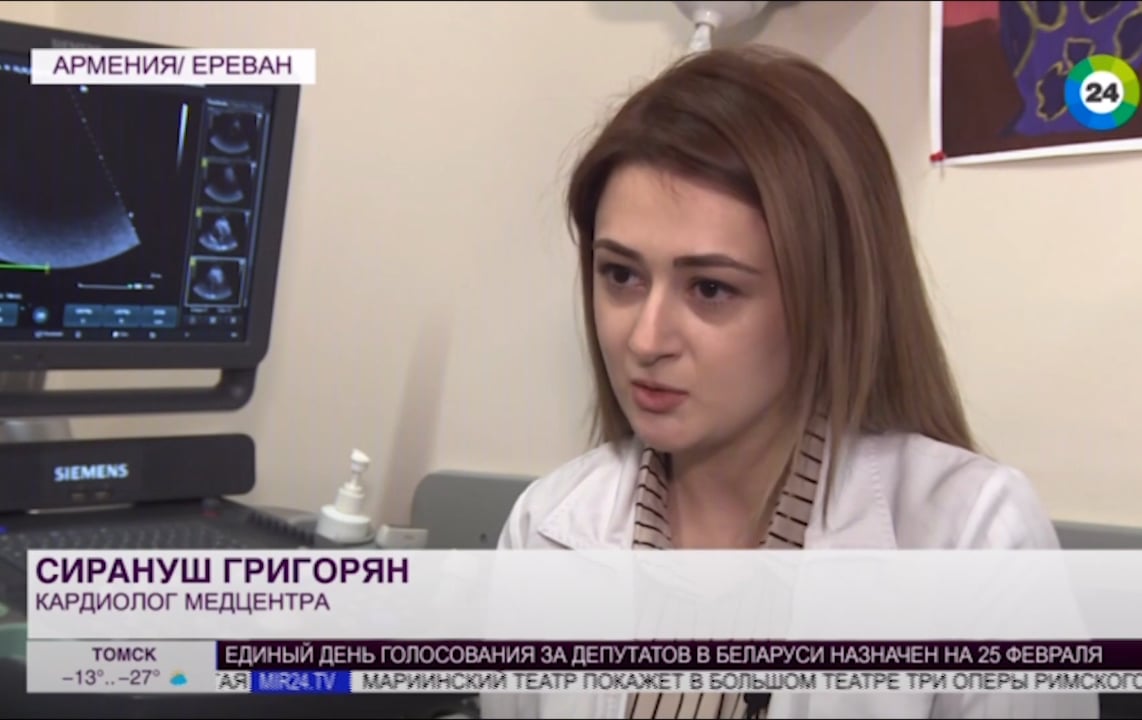
The “24” news program of “Mir” TV company recently covered the topic of organ transplantation, highlighting the case of Yeghishe Khachatryan, who underwent a heart transplant. Yeghishe received his transplant surgery in Minsk and is currently receiving follow-up care at the “Follow-up Care Department for Organ Transplanted Patients” at “Arabkir” medical center. Reflecting on his experience, Yeghishe shares, “Thirteen years ago, I was given a second chance at life. The heart transplant was a turning point for me.”
After undergoing laboratory tests, a visit to the cardiologist, discussions about self-awareness, ultrasound of the heart, ECG, and other procedures every three months are part of Yeghishe Khachatryan’s routine. He holds a unique status as the sole individual in Armenia who has undergone a heart transplant.
Cardiologist Siranush Grigoryan remarks, “Yeghishe's condition remains stable. He diligently adheres to his appointments, medication regimen, and follows all medical advice. He maintains a healthy lifestyle, abstaining from harmful habits. It's essential for him to consume foods that promote lower cholesterol levels, engage in regular outdoor walks, and maintain physical activity."
In 2004, Yeghishe Khachatryan began experiencing symptoms such as chest pain, weakness, and shortness of breath, leading to a diagnosis of a heart attack. The second incident occurred 4 years later, but despite treatment in cardiology hospitals, his condition did not improve. After numerous consultations with medical professionals, it became evident that his heart and blood vessels were extensively damaged, rendering procedures such as stenting or shunting ineffective. The only viable solution was a heart transplant, a procedure not available in Armenia.
Reflecting on his journey, Yeghishe recalls, “By 2012, I was reliant on an oxygen machine for breathing. My brother accompanied me to Novosibirsk, where consultations confirmed that a transplant was my only hope. We were directed to a hospital in Minsk, where I was placed on the transplant waiting list. Within 15-20 days, a donor match was found - a thirty-year-old young man who tragically lost his life in a car accident.”
The procedure was conducted by the renowned cardiac surgeon, Doctor of Medical Sciences, Professor Yuri Ostrovsky. By that time, approximately 100 heart transplants had already been performed at the Minsk Cardiology Center.
Reflecting on the procedure, Professor Ostrovsky states, “The technology was well-developed, and we had accumulated significant experience. The decision to proceed with the transplant was based on the patient's condition. However, selecting a suitable donor-transplant match always presents challenges. Factors such as weight, height, blood type, and compatibility tests, including Cross Match, are considered. We ensured that all criteria were met before proceeding with the transplant.
The total cost of the surgery, tests and medications amounted to $55,000, which was covered by contributions from Yeghishe's brother and friends.
Expressing his gratitude, Yeghishe remarks, “Of course, I remember Yuri Petrovich. He is a kind person. I am thankful to him, the entire medical team, our doctors who continue to monitor my health, my brother, and to all those who helped. Having experienced this journey, I urge my fellow citizens to reconsider their views on organ donation. By consenting to organ donation from deceased relatives, many lives can be saved.”
In Armenia, only kidneys, liver, corneas are currently eligible for transplantation, with donors limited to close relatives. According to the Organ and Tissue Transplantation Act, individuals can be considered potential donors after death if their family members consent to organ retrieval. However, as of yet, there have been no instances of post-mortem organ donation. To address this, the Ministry of Health is working on changing the law to allow organs to be donated after someone passes away and to create a list of people waiting for transplants.
Elen Nazaryan, head of the Hemodialysis Department at the “Arabkir” Medical Center, underscores the significance of these proposed changes, stating, "Reforming the law would enable the establishment of a repository of posthumous donor organs, facilitating heart, lung, pancreas, and additional kidney transplants.
Currently, Armenia accommodates 1,100 dialysis patients, including 400 awaiting kidney transplants. The full implementation of a transplant recipient registry hinges on the integration of all major medical centers into the electronic healthcare system.
Experts contend that the adoption of posthumous donation protocols would significantly enhance the prospects of saving lives. Later in the evening, Yeghishe Khachatryan will gather with his family to commemorate his "second birthday" and express gratitude to those who bestowed upon him a renewed lease on life.