 English
 Հայերեն
 Русский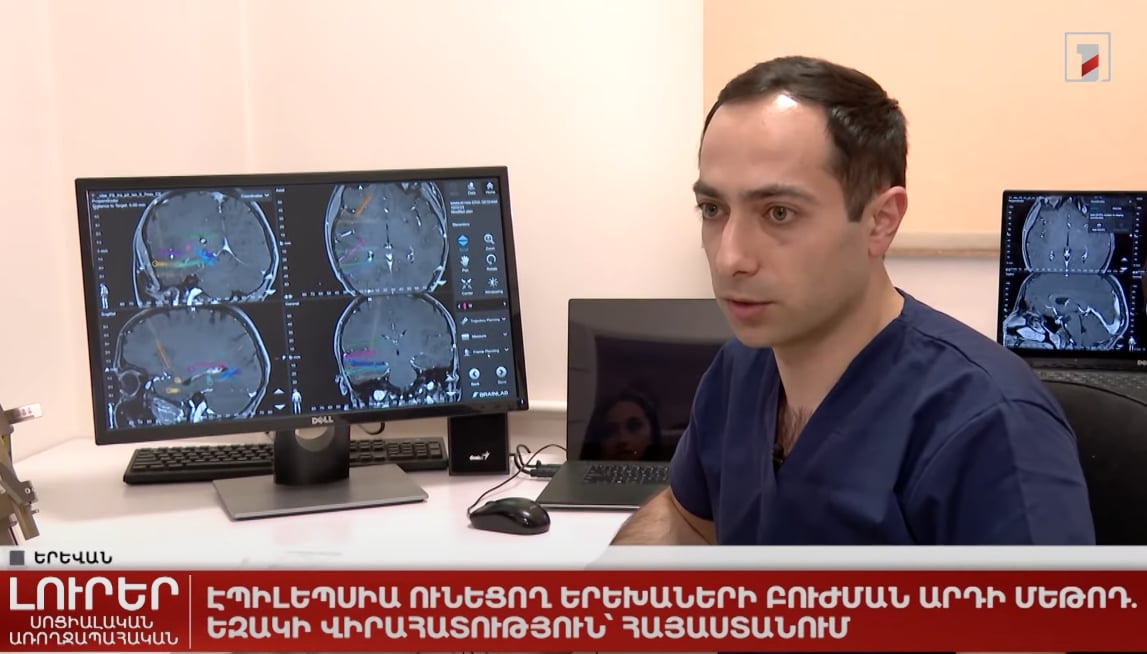
The Public TV has highlighted the adoption of a less invasive surgical method for diagnosing and treating children with epilepsy at the "Arabkir" medical center. This advancement in modern medicine, stereotactic electroencephalography, enables precise identification and removal of epileptogenic foci, leading to significant improvements in patients’ quality of life.
Niko Arzumanyan, the head of the Neurosurgery service at the “Arabkir” MC-ICAH, explains, “Through the sequential recording of brain electrical activity from each microelectrode of the implanted electrodes, relevant specialists identify the foci responsible for epileptic seizures in the patient during the study.”
Stereo-EEG was performed for the first time on a child with epilepsy in Armenia. This method is considered one of the most modern and complex approaches to treating this condition. It involves a minimally invasive intervention, allowing for the precise identification of the epileptic focus by gathering information about the activity of brain cells.
Niko Arzumanyan explains, “When a specific epileptogenic zone is identified, we immediately conduct radiofrequency ablation of the indicated areas without any incision or damage to the skull. This procedure targets the identified foci, offering patients the opportunity to alleviate their epileptic seizures. For most patients, stereo-EEG provides crucial information, enabling us to identify the epileptogenic zone accurately. Subsequently, we perform open surgery to achieve optimal results.”
Biayna Sukhudyan explains, “Following the intervention, the patient, who previously experienced seizures monthly, remained seizure-free for a month. This outcome indicated the correctness of our decision, and we recognized that complete cessation of seizures was not achievable after the ablation. Another month elapsed before we performed surgery on the patient and surgically removed the identified focus.”
Armenian doctors, in collaboration with Bulgarian colleagues, conducted a stereo-EEG procedure on a 14-year-old child. The doctor elaborates that the intervention is facilitated through the use of a stereotactic system.
Neurosurgeon Niko Arzumanyan further explains and demonstrates, “The device features numerous coordinates and angles, aiding us in pinpointing the exact location for electrode insertion into the brain. A 1.5mm incision is made in the skin, followed by a 2mm diameter incision in the skull, through which electrodes are carefully placed deep into the corresponding brain regions.”
An epileptology dispensary operates within the "Arabkir" medical center, where approximately 3,800 patients under the age of 18 are registered.
Biayna Gagikovna explains, “It's important to note that surgery is not suitable for all epilepsy patients. Approximately 70% of patients can be effectively treated with medication, while around 30% have drug-resistant forms of the condition. Hence, only about 50% of patients are eligible candidates for epilepsy surgery. Epilepsy, being a chronic disease, can manifest in various ways, from motor to emotional seizures.”
Doctor Sukhudyan elaborates, “In childhood, we primarily encounter hereditary forms of epilepsy, although there are several acquired causes as well. These include infantile cerebral palsy, fetal asphyxiation at a young age, various infectious diseases affecting the brain, tumor diseases, and immune disorders. In other words, there can be numerous underlying reasons.”
If a person is having seizures in a public place, citizens often take the wrong steps when providing first aid, according to the doctor.
Doctor Sukhudyan advises, “It's crucial to avoid taking incorrect actions when providing assistance. Refrain from intervening, attempting to open the patient's mouth, pulling their tongue out, or trying to revive them forcibly, as such actions can be harmful. Instead, the first step is to gently turn the person onto their side and promptly call for emergency assistance.”