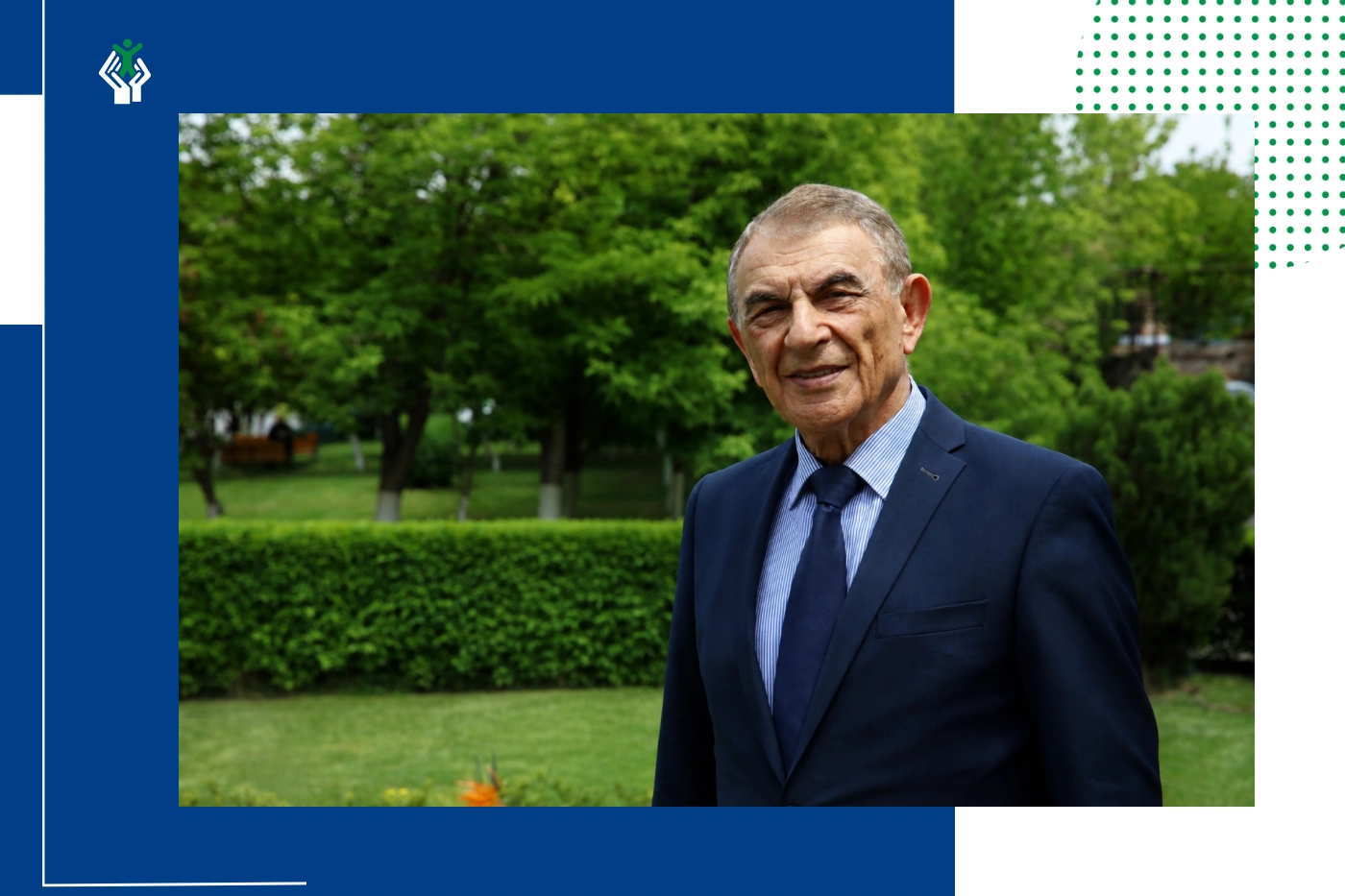
“Our Goal Is to Provide Accessible and High-Quality Pediatric Medicine, Regardless of a Family’s Means,” Says Ara Babloyan
20 March
The pediatric healthcare system in Armenia is on the verge of significant changes: strengthening primary care, decentralizing services to the regions, introducing the latest medical technologies, and expanding international cooperation.In an interview with Armenpress, Ara Babloyan, pediatrician, Chairman of the Board of Directors, and Scientific Director of Arabkir Medical Center, discussed the sector’s development priorities, the Center’s achievements over the past year, and the challenges currently facing pediatric healthcare.
— Mr. Babloyan, how would you assess the past year for the Center, and what were its most significant achievements?— Arabkir Medical Center is a dynamically developing institution, and our work should be viewed as a continuous process. We constantly review the functions we perform, striving to improve and further develop them, bringing our services to a higher level.
Our activities have several main directions. The first is the provision of daily medical services, including pediatrics, pediatric surgery, otorhinolaryngology (ENT), orthopedics, and other specialties. These services form the foundation of the system.
At the same time, we are actively developing highly specialized fields where we have achieved particularly strong results. In pediatric neurology and neurosurgery, for example, Arabkir has become a leader not only in Armenia but also in the region. We treat patients from abroad, especially from Central Asia, who come to our Center for effective care.
The field of epilepsy is especially important for us. We currently have more than 4,000 patients under our care, which is a considerable number for Armenia. Treatment is primarily medication-based; however, when this approach proves ineffective, we turn to surgical methods.
In this area, we have gone through several stages of development—from traditional open surgeries to the introduction of stereotactic techniques. These methods make it possible to identify the source of the problem within a few days and perform radiofrequency ablation without open surgery. Currently, we are also introducing deep brain stimulation, representing a new stage in the development of epilepsy treatment.
Read the full interview on the Armenpress website.