 English
 Հայերեն
 Русский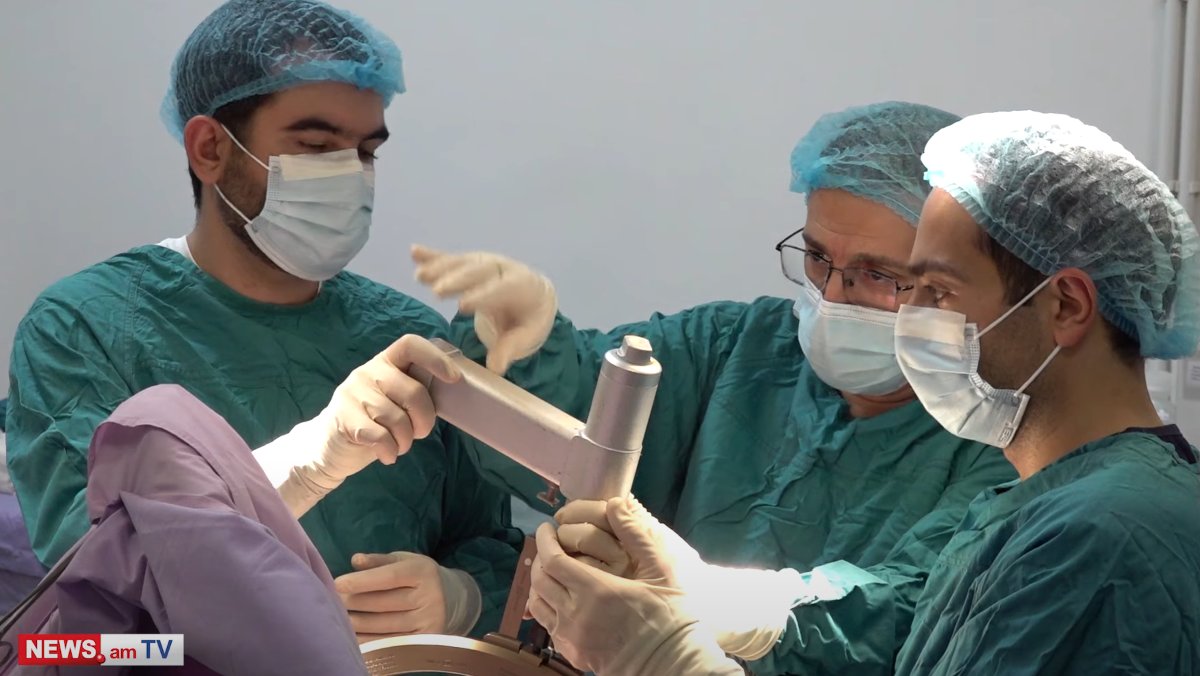
The team of neurosurgeons and neurologists at the “Arabkir” Medical Center is introducing modern methods for diagnosing and treating epilepsy in Armenia. Collaborating with colleagues from the University Hospital “St. Ivan Rilski” in Sofia, Bulgaria, our specialists recently performed stereo-EEG, a unique intervention that precisely identifies the source of epileptic seizure activity and facilitates coordination for subsequent surgical treatment.
Further details can be found in the video on news.am.
14-year-old Eric, who has been dealing with drug-resistant epilepsy since childhood, now has an opportunity to overcome seizures. He underwent a modern examination at the “Arabkir” medical center, specifically stereo-EEG. This diagnostic and, in some cases, treatment method, accurately identifies epileptic seizure foci in the brain - a procedure performed for the first time in Armenia.
Unlike regular electroencephalography, stereo-EEG is a minimally invasive surgical procedure. Special electrodes are placed in deeper areas of the brain using a stereotactic system, recording epileptic activity.
“Firstly, stereo-EEG is primarily considered a diagnostic method. However, based on its results, a minimally invasive surgical treatment of epilepsy can be undertaken. After placing the electrodes, the neurological team examines all contacts. Upon identifying relevant epileptogenic foci, a discussion is held to determine whether to proceed with coagulation or the surgical removal of the area,” says Sevak Badalyan, a neurosurgeon from the “Arabkir” MC.
Eric’s case presented a unique challenge: despite undergoing various examinations, the epileptogenic focus could not be identified. To achieve accurate diagnosis, 12 electrodes have been placed in his brain, and specialists are monitoring the child’s brain electrical activity to decide the course of further treatment.
“The reason we opted for stereo-EEG in this patient was due to uncertainty about the origin of epileptic activity. While an epileptic focus was visible on the MRI, the description, videotape and EEG did not align. Clinicians entertained doubts that this identified focus was the one to be removed. Therefore, electrodes were placed not only in that focus but also in anterior areas that appeared more suspicious of causing the clinical picture of the seizure.By the second day after electrode placement, we were convinced that our hypothesis was correct. The identified area had no connection with Eric’s epilepsy, and seizures were originating from slightly anteriorly located areas on the same side. This allows us to plan the upcoming surgery accurately” says Biayna Sukhudyan, head of the Neurology and Epileptology service at the “Arabkir” MC.
The first stereo-EEG at the “Arabkir” Medical Center was conducted in collaboration with Bulgarian specialists. According to the pediatric neurologist Petia Dimova from Sofia, they have been working in partnership with Biayna Sukhudyan and the Neurosurgical team at the “Arabkir” MC for 15 years.
“It’s a wonderful team. Although this is the first case, they are already well-versed and capable of conducting similar procedures in the future, thereby assisting patients in Armenia. This hospital, under its management, is dedicated to making all modern diagnostics and treatment methods accessible to citizens, particularly children, in Armenia” says Petya Dimova, a pediatric neurologist from Bulgaria.
The specialists are currently monitoring the child’s spontaneous seizures and conducting special stimulation to identify contacts for ablation. While small foci can be addressed with a temporary effect, the ultimate solution for treating the disease involves the surgical removal of the epileptogenic focus.